Research Interests & activities
As a physicist and astronomer who specializes in observational cosmology, I am interested in combining data from current and upcoming astronomical surveys to better constrain cosmological parameters, test the Lambda-CDM cosmological model against alternatives, uncover the nature of dark energy, and learn more about fundamental physics.
My research relies on understanding the various steps of the cycle of a cosmological survey – from the planning to the pixel, to the final cosmological constraints and everything in between. Aside from developing novel analysis methods and tools, I am particularly interested in how each step influences the others and how to optimize their integration to maximize the precision, accuracy, and reliability of cosmological measurements, with the ultimate goal of advancing our understanding of the universe.
Galaxy Clustering
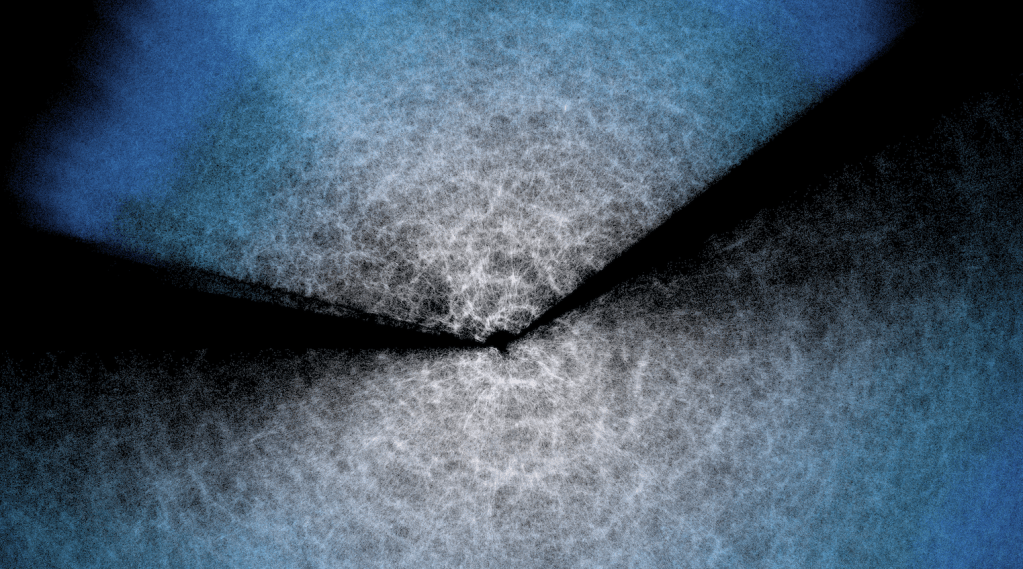
Galaxy clustering refers to the non-random, hierarchical distribution of galaxies throughout the universe, forming a “cosmic web” of clusters, filaments, and voids rather than being uniformly scattered. By studying these clustering patterns, we can measure fundamental cosmological parameters (like the amounts of dark matter and dark energy), test theories of gravity on cosmic scales, understand how cosmic structure evolved from tiny primordial fluctuations, and reveal how galaxy formation is influenced by environment—making it one of the most powerful tools for understanding the universe’s composition, evolution, and underlying physics.
The Lyman-alpha forest & IGM Cosmology
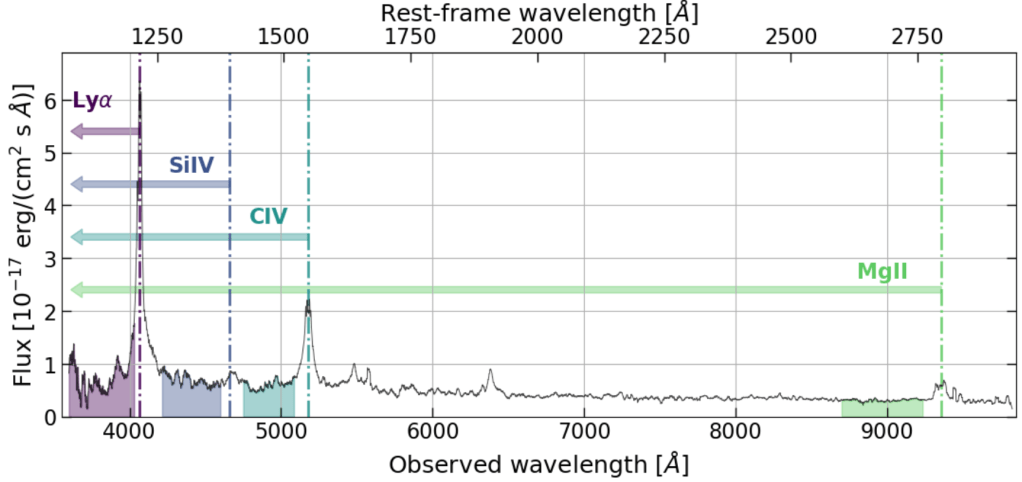
The Lyman-alpha forest consists of the series of absorption lines in distant quasar spectra created by intervening neutral hydrogen clouds in the intergalactic medium (IGM). IGM cosmolgy is a type of galaxy clustering that uses these series of absorption features in the spectra of high redshift quasars (or galaxies) to create a 3D map of the distribution of cold gas across cosmic time. This probe enables the measurement of the universe’s expansion history, dark matter properties, and neutrino masses, while revealing the thermal state of intergalactic gas, the timeline of cosmic reionization, and small-scale structure formation that’s inaccessible to galaxy surveys alone —making it a unique window into both cosmology and the evolution of baryonic matter throughout the universe’s history.
Cross-probe analyses + Synergies between surveys
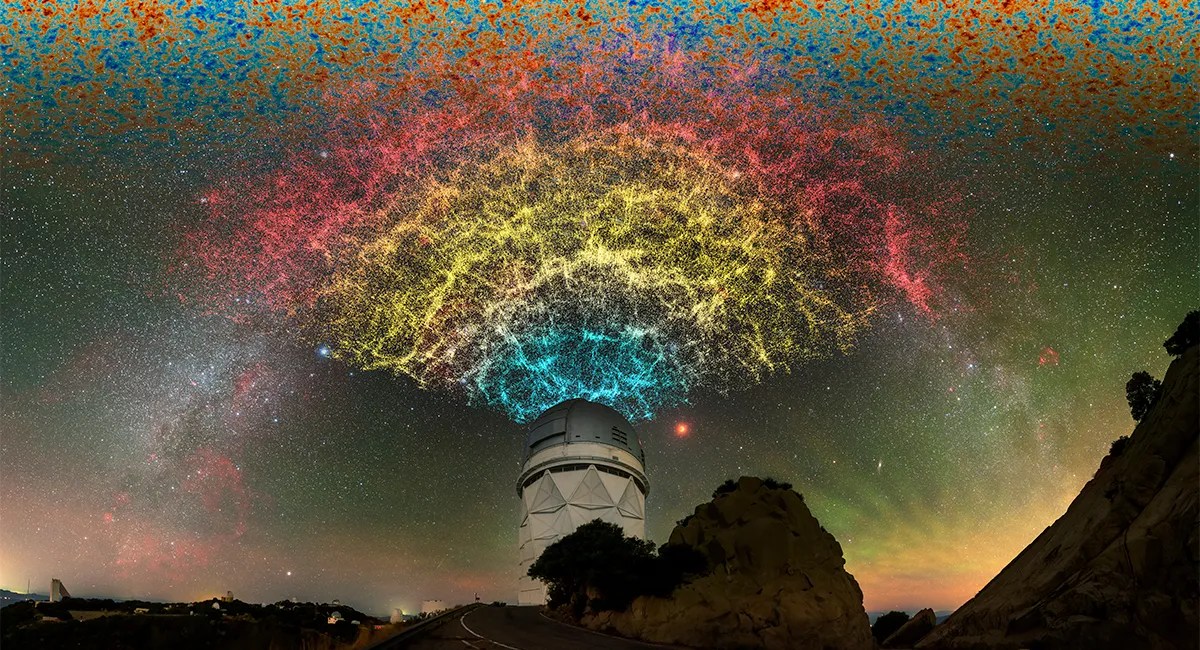
When combined, these complementary datasets create a powerful synergy: CMB data anchors our understanding of initial conditions and fundamental cosmological parameters, Spectroscopy traces the cosmic web’s growth and provides precise distance measurements through baryon acoustic oscillations, and Imaging maps the matter distribution through gravitational lensing effects. This multi-messenger approach enables unprecedented tests of dark energy, dark matter, and modified gravity theories, while also providing the statistical power to detect subtle signatures that might remain hidden in individual datasets.
Machine Learning applied to Astronomy
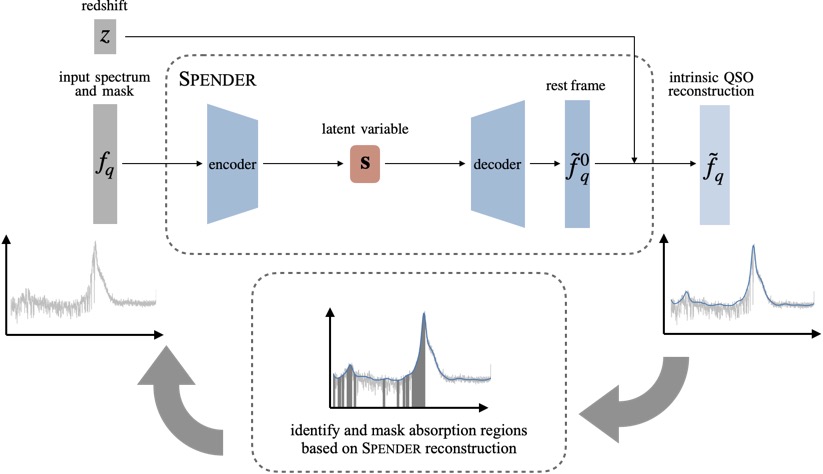
Machine learning methods are algorithmic approaches that use statistical techniques to find patterns in data, build mathematical models from training examples, and make predictions or decisions on new, unseen data. Those methods present a window of opportunity in the field of astronomy as it is becoming increasingly data-rich. Indeed, along with exciting opportunities to learn more about our universe, come challenges with regards to handling the scale and complexity of upcoming datasets, pattern recognition in high-dimensional data, optimal information extraction, and much more.
DESI Survey Operations, Future Spectroscopic Surveys
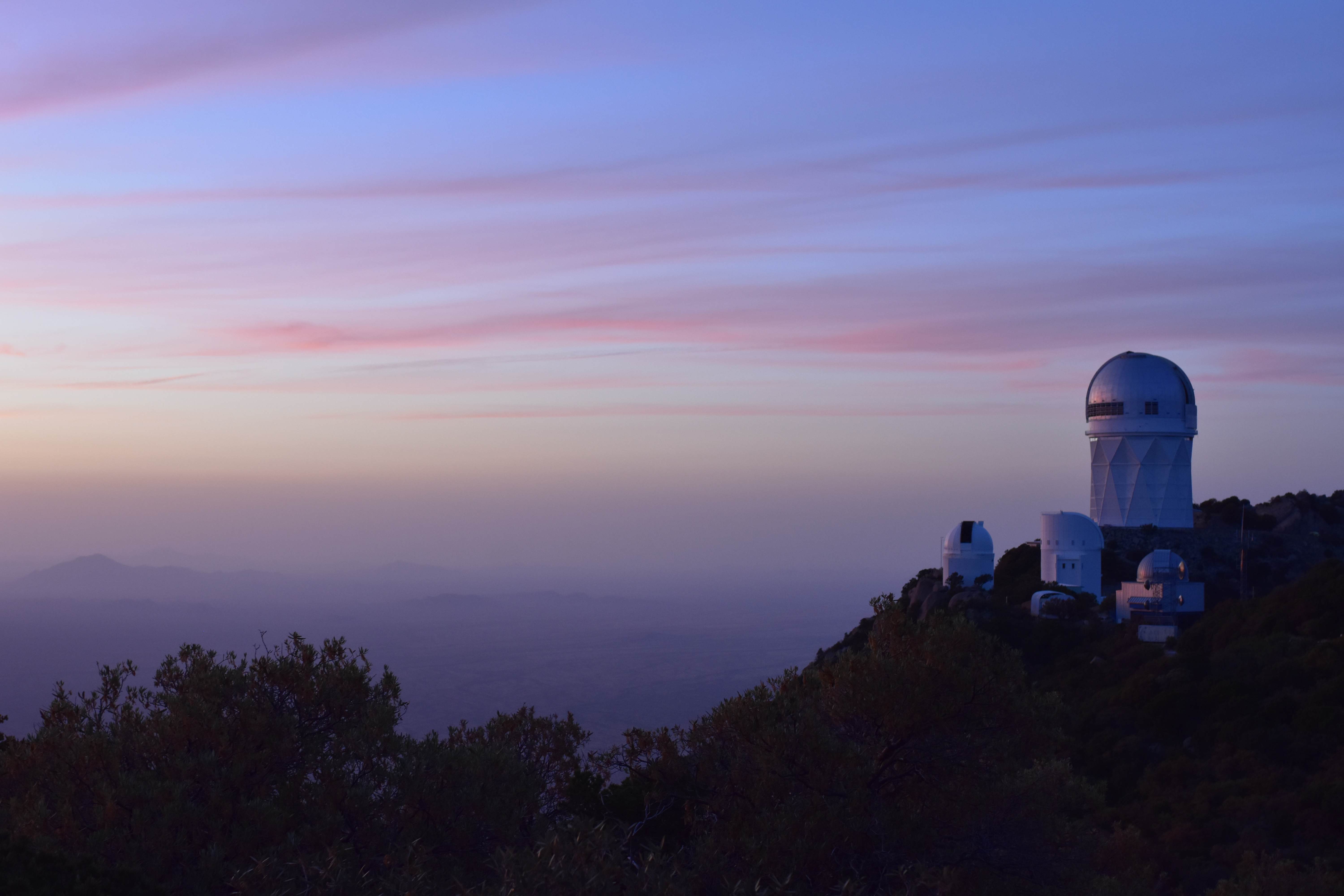
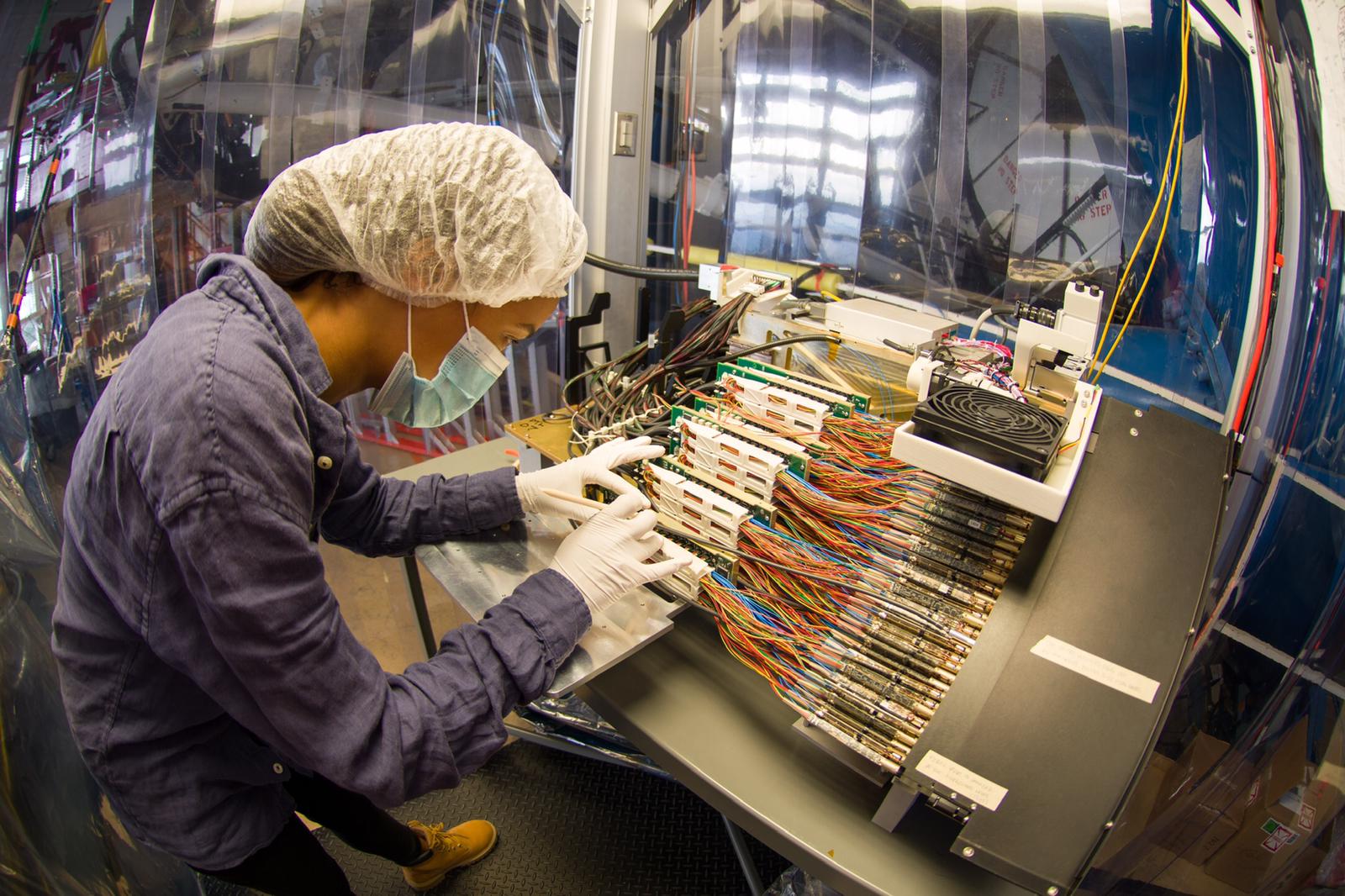
Behind every cool cosmological analysis lies years of extensive infrastructure development that begun long before the first scientific results emerged. This foundational work encompasses designing and constructing sophisticated instruments, carefully planning survey strategies to optimize scientific returns, and developing complex data reduction pipelines to transform raw detector outputs into understood catalogs to be used for measurements. This work represents the critical foundation that enables the astronomical research that follows.
 Satya Gontcho A Gontcho